

Testimonials

My first tour of the current Haliburton Forest sawmill was with my wife and my father. It was a very enjoyable morning, and it sparked stories of when the mill at Haliburton Forest was operated by Hay and Co.

Godfrey


Book Button


Sawmill Gallery

SlideshowFx Picasa Widget for Joomla!
Copyright © 2010 www.OopsTouch.com

Sawmill

Modern highly automated Sawmill

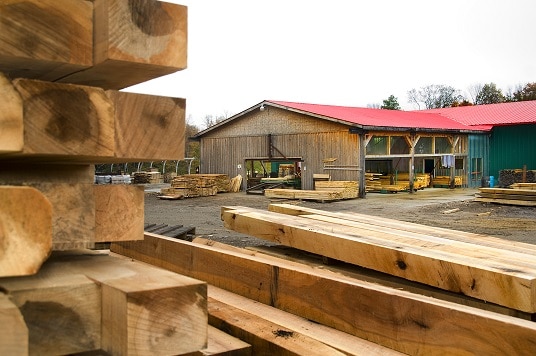
Timber harvesting has been carried out on the lands we today call Haliburton Forest ever since Europeans started settling in the Haliburton area in the mid 19th century. Believing Aerial view of the Haliburton Forest sawmillthat the vast forests were inexhaustible, the first decades of forestry activities were not sustainable and resulted in forests declining rapidly in quality, health and structure. By the middle of the last century the sawmill at present day Base Camp literally ran out of wood and was abandoned by its owners. With that the lands passed into the care of new owners, who created what today is Haliburton Forest and Wild Life Reserve Ltd. . Hand in hand with this new ownership came a shift in management, based on European principles of sustainability and a longterm, strategic perspective, considering forest recovery and development in centuries, rather than decades. Within 50 years of this new approach, the once depleted forests had improved sufficiently to allow for the construction of a new sawmill, which would be solely fed by timber from the company's holdings. In 2009 this mill sawed its first board and since then has produced about 4 million boardfeet of lumber annually. Together with this annual volume of boards and timbers, the mill generates 10,000 tons of woodchips and a combined total of another 10,000 tons of bark and sawdust.

Picture of highly automated sawmill of Haliburton ForestTwo features are unique about this new mill: firstly, where commonly a forest serves a mill, in the case of Haliburton Forest, the mill's prime purpose is to serve the forest. This in turn creates the second unique feature, which requires the mill to process the entire array of woods generated, including all 25 species of trees grown at Haliburton Forest, from the lowly poplars and ironwoods to highly desired cherries and oaks. The processing also includes all quality classes from very poor grades of logs to the very best qualities of timber a forest can produce.

In the end the resulting lumber is being sold into the world market: the lower grades of lumber and timber are used as railway ties, pallet boards and truck flooring; the high grades will make furniture and are used for applications with decorative and ornamental purposes. Lumber of all species but especially that with special features is used extensively in the products created at the Haliburton Forest Woodshop. Most hemlock timbers and lumber is destined for log homes of Haliburton Forest's own EcoLog log home operation. 

The sawmill is set up to welcome visitors and tours of the mill can be arranged through Haliburton Forest's main office.

FSC LabelAs an extension of its forest, all products generated at the Haliburton Forest sawmill are certified by the internationally recognized Forest Stewardship Council® (FSC) as 100% Pure, a designation rarely achieved on this continent. This ensures customers that the highest level of environmental and social care is being taken in the generation of all wood products at Haliburton Forest.

Lumber, timbers and other wood products from Haliburton Forest's mill can be obtained by contacting the Haliburton Forest sawmill at (705) 754 0101 or the Haliburton Forest Woodshop at (705) 754 0556.